Experiencing History (ExHis) – Closing Conference Vienna
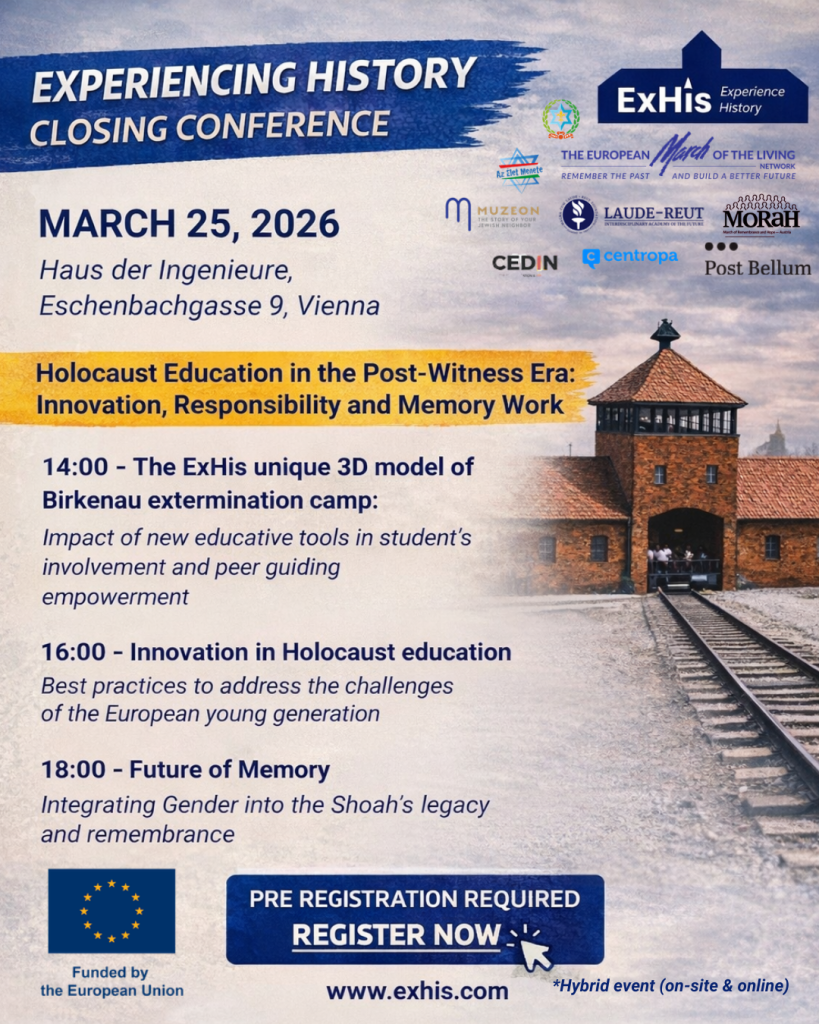
25 March 2026 | Haus der Ingenieure, Eschenbachgasse 9 |
Hybrid Conference (on site & online)
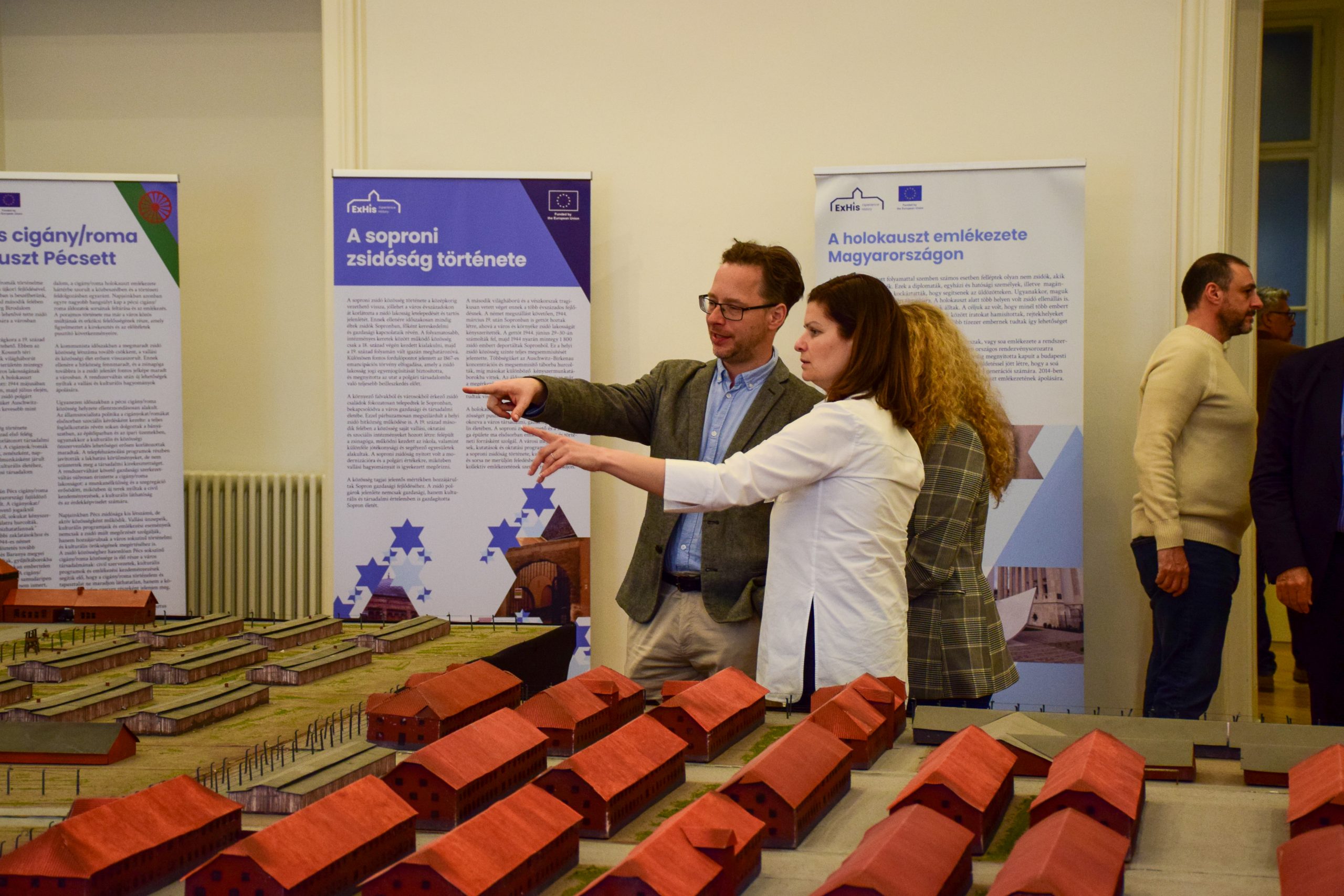
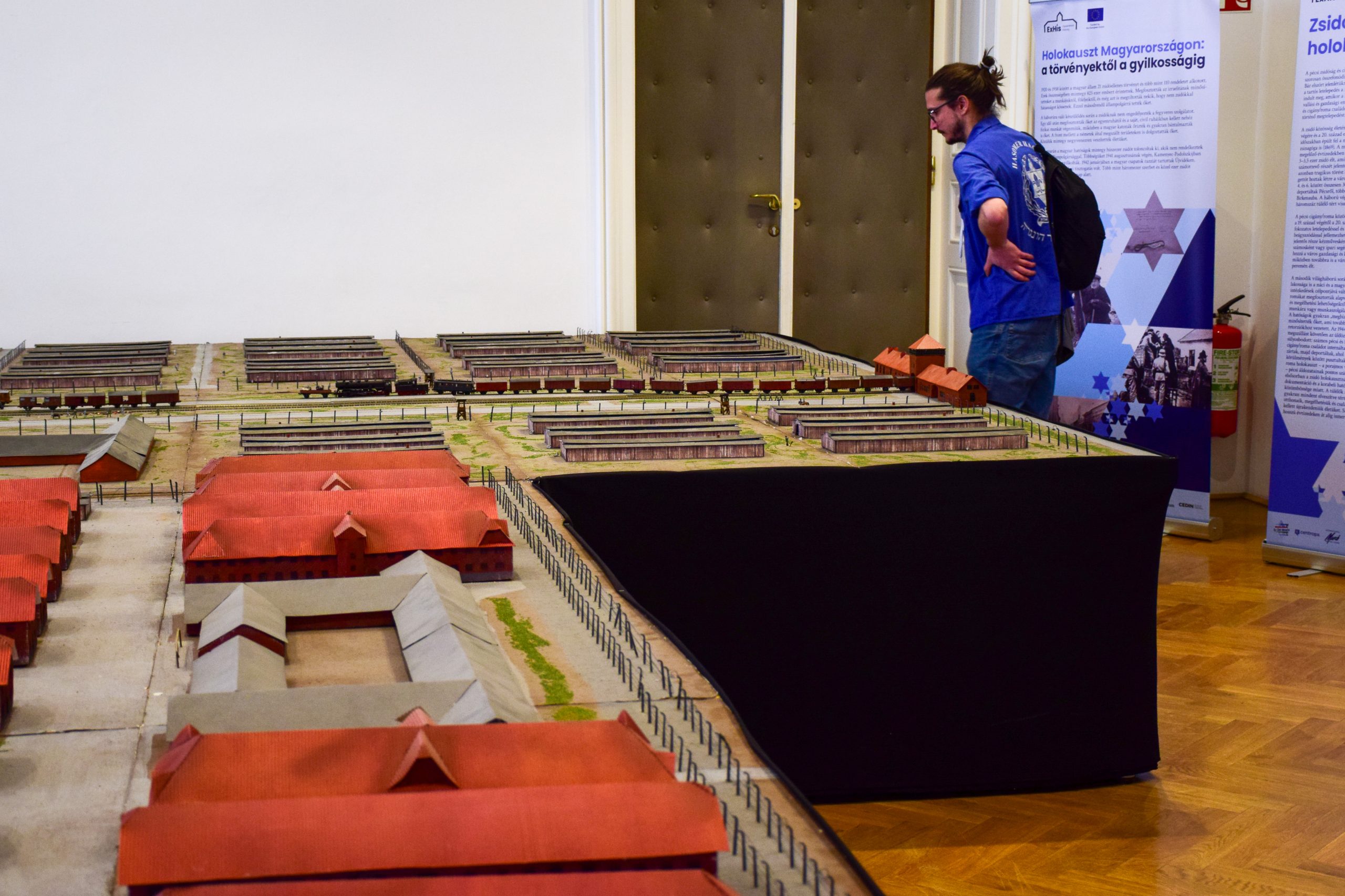
Exhibition of the mobile 3D model of Auschwitz-Birkenau
1. Overall
Framework and Objectives
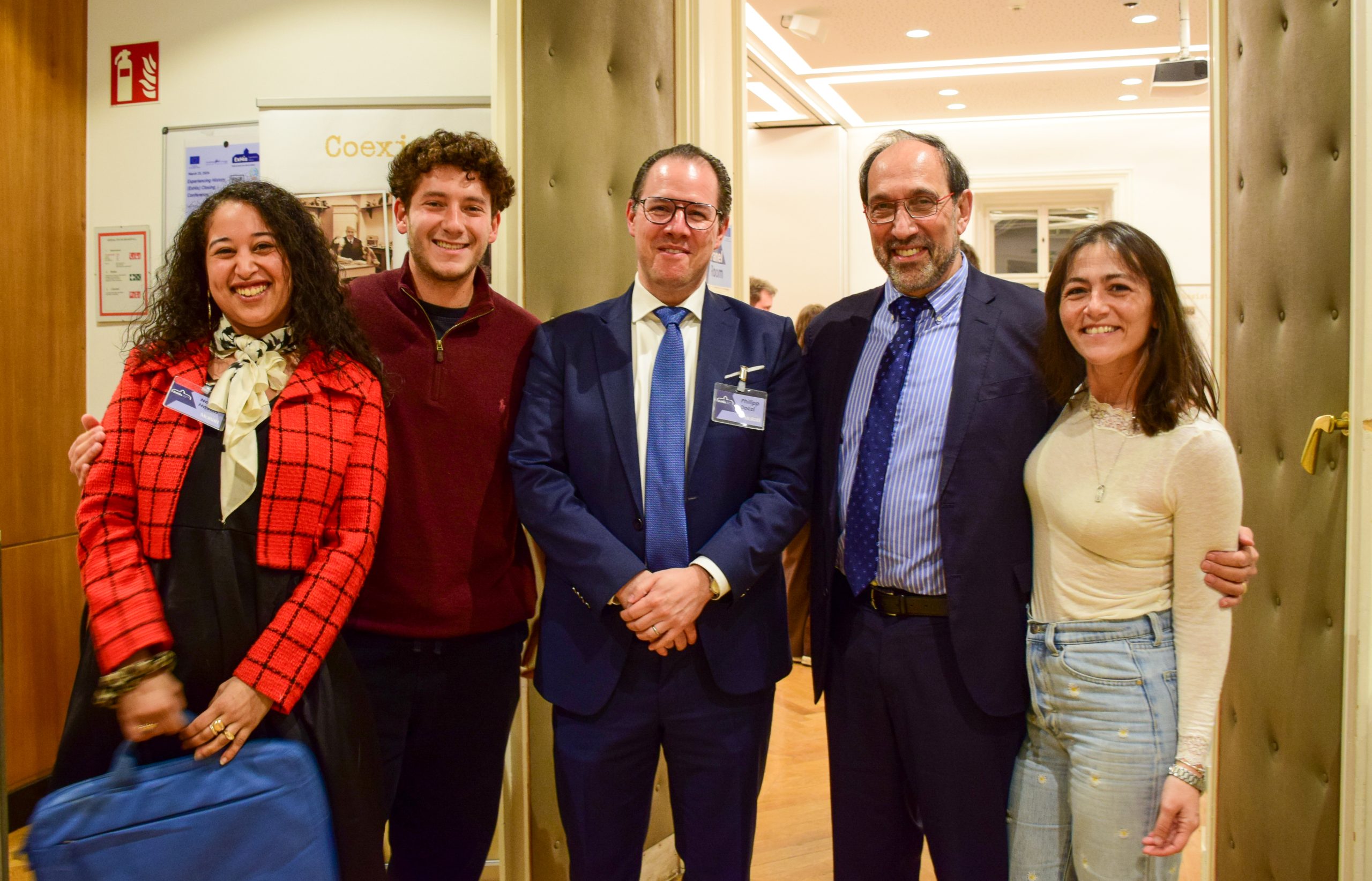
The ExHis Closing Conference marks the final dissemination event of the EU funded CERV project “Experiencing History (ExHis)”. In line with Work Package 14 and its officially approved deliverables, the conference is designed as a one day international hybrid event that brings together European project partners, Holocaust educators, researchers, teacher trainers, representatives of memorial institutions, civil society organisations, NGOs and policy stakeholders.
The central objectives of the conference are:
– the dissemination of the ExHis methodology and results
– the transferability and replicability of innovative educational approaches
– the European exchange of best practices in contemporary Holocaust education
– the strengthening of cross border cooperation between educational institutions, memorial sites, research contexts and civil society and
– the reflection on Holocaust education in post witness societies.
The conference explicitly positions itself as a European platform for exchange, cooperation and knowledge transfer and contributes to building sustainable networks beyond the project duration.
2. Core Content and Structure of the Conference
The conference is structured as a one day program on 25 March 2026 and includes three core elements:
At 14:00 the conference opens with the presentation of the ExHis methodology and the unique mobile 3D model of Auschwitz Birkenau (30 square metres). This session presents the model as both an innovative educational tool and a research based methodological innovation. It highlights experiences from peer guided educational formats implemented in Hungary, Romania and Slovakia, reflects on methodological transferability and replicability, and integrates gender perspectives into the interpretation of sites of violence and memory.
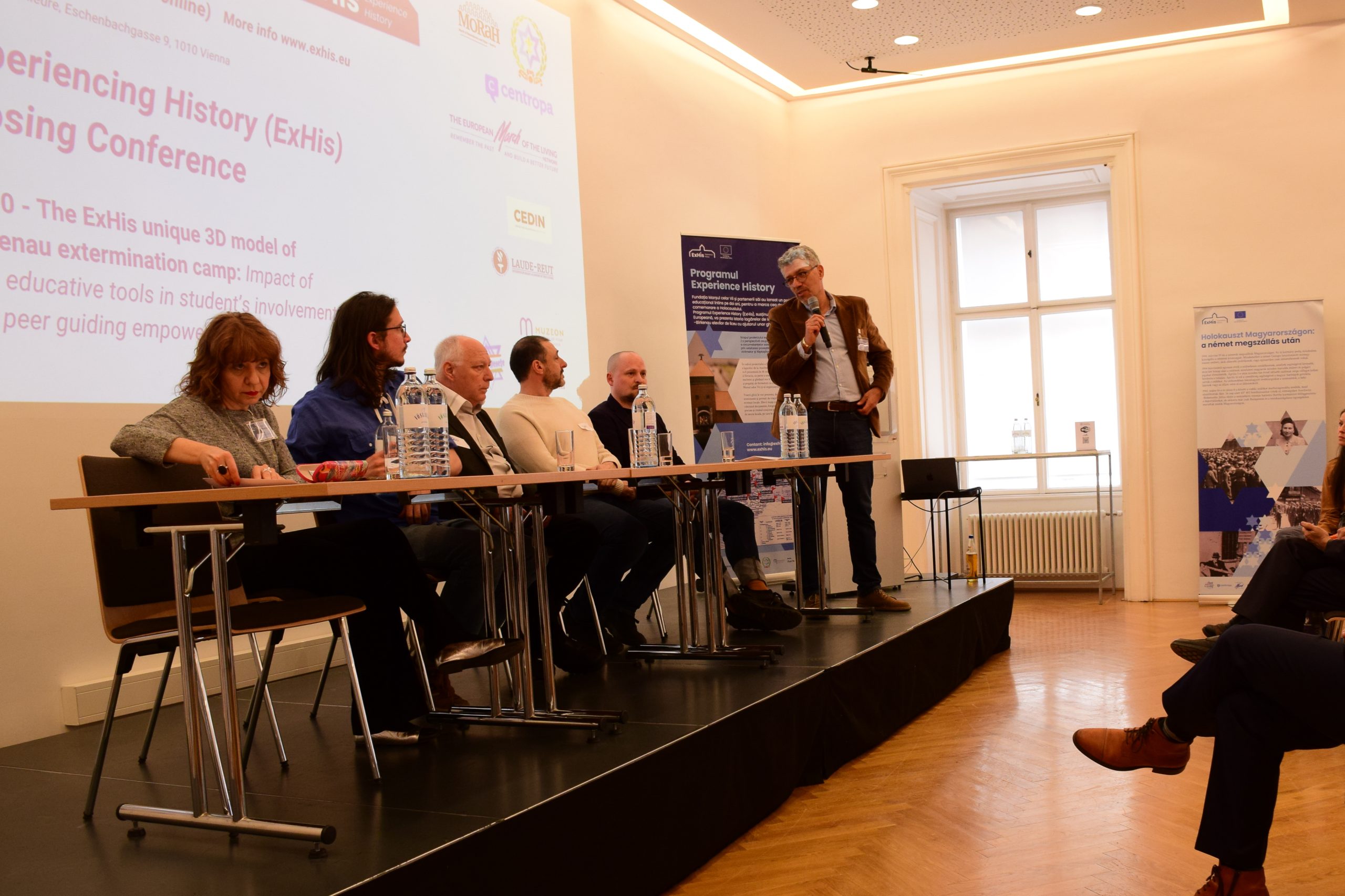
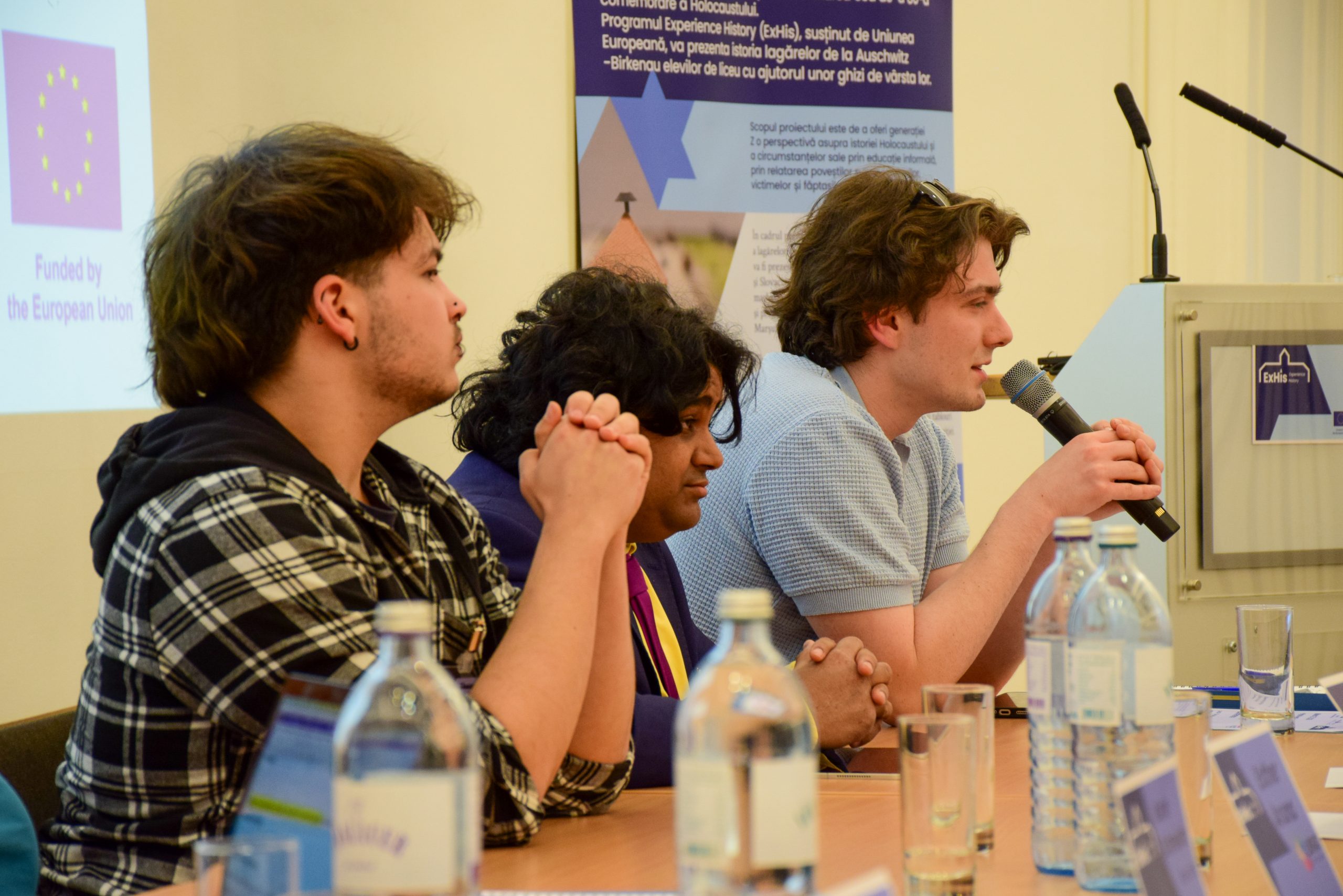
At 16:00 the pedagogical panel focuses on implementing innovative educational methods in Holocaust education in secondary schools and teacher training. The panel discusses practical classroom and extracurricular experiences, peer guided learning formats, teacher education, challenges of reaching new generations in post witness contexts, and the role of gender perspectives in pedagogical approaches. The panel brings together practitioners from educational initiatives, teacher training institutions, research projects and European partner countries.
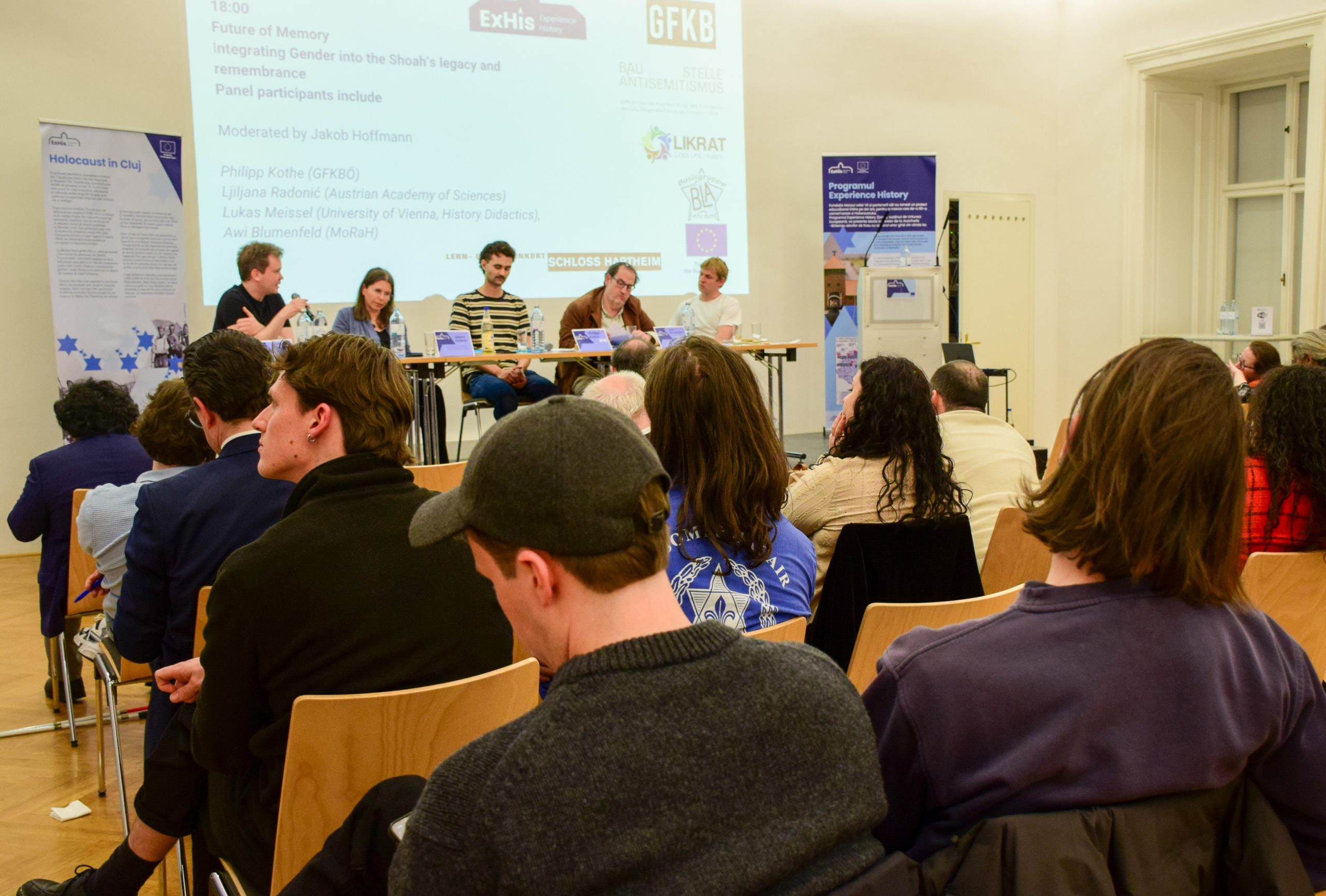
At 18:00 the theoretical and academic panel addresses broader philosophical, political and ethical questions of Holocaust remembrance after the era of living witnesses. It reflects on institutional and societal responsibility, political education and democratic resilience, theoretical approaches to remembrance, and gender perspectives in memory studies and Holocaust education. This panel situates the ExHis project within wider European and international debates on post witness remembrance cultures.
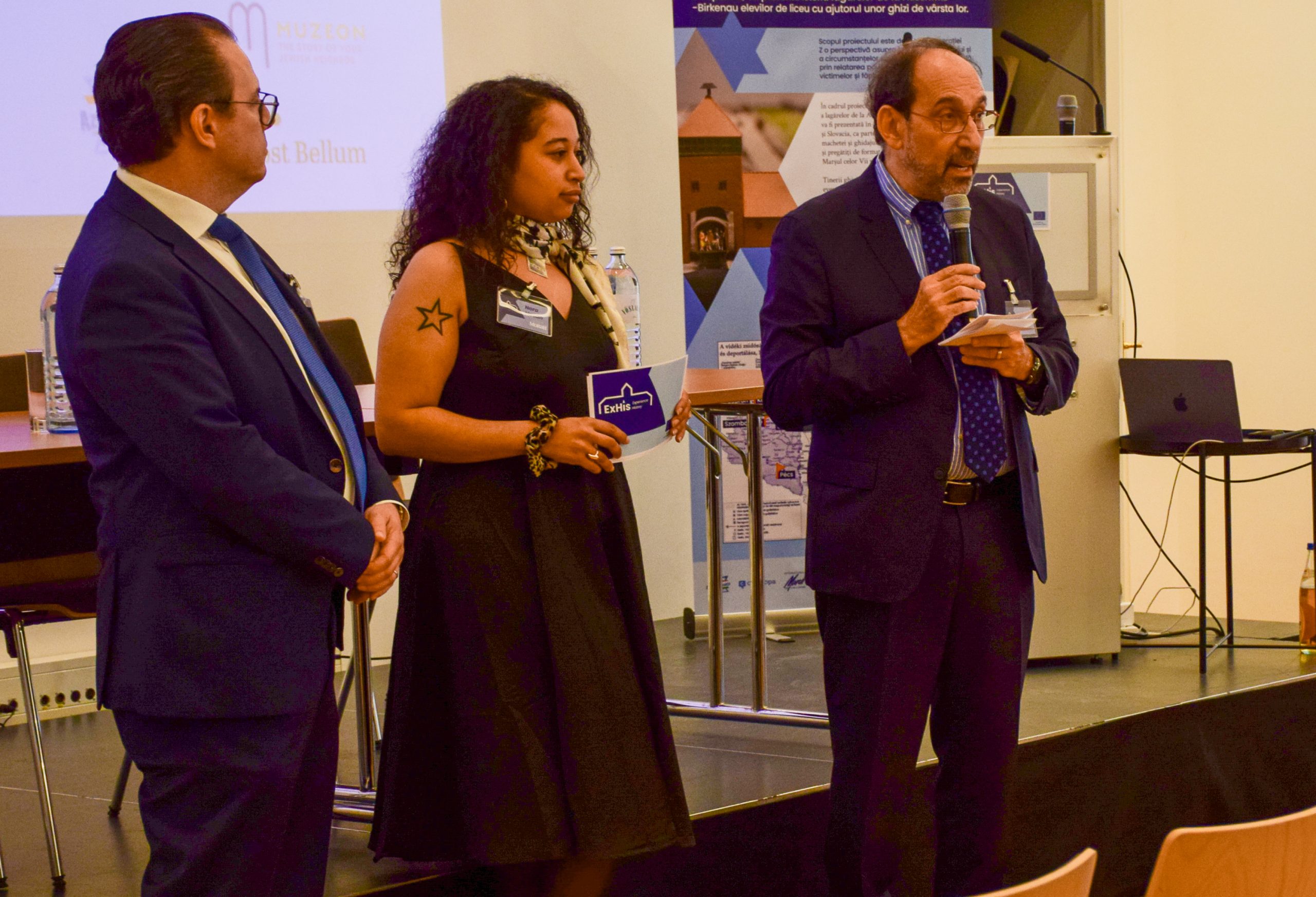
Both panels are moderated by Nora Hasan (MoRaH – March of the Living Austria) and designed to foster dialogue between research, educational practice, civil society and policy.
3. Gender Perspective, Peer Education and Digitalisation
Gender perspectives are integrated as a cross cutting theme throughout the conference and addressed explicitly in the theoretical panel as well as in the pedagogical panel. The conference reflects the project’s commitment to addressing underrepresented perspectives in Holocaust remembrance and memory politics.
Peer guided learning and digitalisation are presented as core methodological components of ExHis within the methodology session and discussed in the pedagogical panel. The conference highlights how peer education formats and digital tools can contribute to innovative, low threshold and sustainable Holocaust education in contemporary European contexts.
4. Exhibition of the Mobile 3D Model
The mobile 3D model of Auschwitz Birkenau (30 square metres) is a central element of the ExHis project. It was exhibited on 25 and 26 March 2026.
On 25 March, the exhibition is embedded in the conference program.
On 26 March, the model remains accessible as an outreach and educational activity for interested institutions, university seminars, teacher training groups and other educational audiences. No additional conference program takes place on 26 March. This outreach day serves the dissemination and transfer objectives of the project.
5. Commemorative Dimension
The commemorative dimension of Holocaust remembrance is integrated into the overall framing of the conference. The opening session and the conceptual framing of the panels connect commemoration, education and responsibility in post witness societies. The conference situates contemporary educational innovation within the broader moral and historical responsibility of European societies to remember, reflect and act.
6. European, International and NGO Dimension
The ExHis Closing Conference is explicitly designed as a European and international event. It brings together partners and contributors from multiple European countries and actively includes NGOs, memorial institutions and civil society organisations alongside academic and educational stakeholders. This strengthens transnational exchange, fosters synergies between organisations, and supports the European transfer of project results.
Outreach and dissemination are implemented through coordinated communication via the ExHis consortium, MoRaH and partner networks, targeted invitations to educators, universities, memorial institutions and NGOs, and media and PR outreach. Online participation ensures access for European and international stakeholders who cannot attend in person.
7. Hybrid Format and Participation
The conference takes place as a hybrid event with on site participation in Vienna and live streaming for online participants. Registration is required for both formats. The hybrid design ensures broad European participation and aligns with the dissemination requirements of the European Commission.
8. Compliance with EU Requirements
The conference fully reflects the objectives, guidelines and deliverables of Work Package 14 as approved by the European Commission.
It is structured as a one day closing conference that ensures:
– European visibility of the ExHis project
– methodological dissemination and transfer
– cross border exchange and cooperation and
– sustainable impact beyond the project duration.